
You visit a dentist because of pain near the back of your jaw. You expect the dentist to examine the tooth, prescribe medication, or perhaps suggest a simple dental X-ray. Instead, after examining your mouth, the dentist says: “Let's get an OPG first.” For someone hearing the term for the first time, the immediate questions …
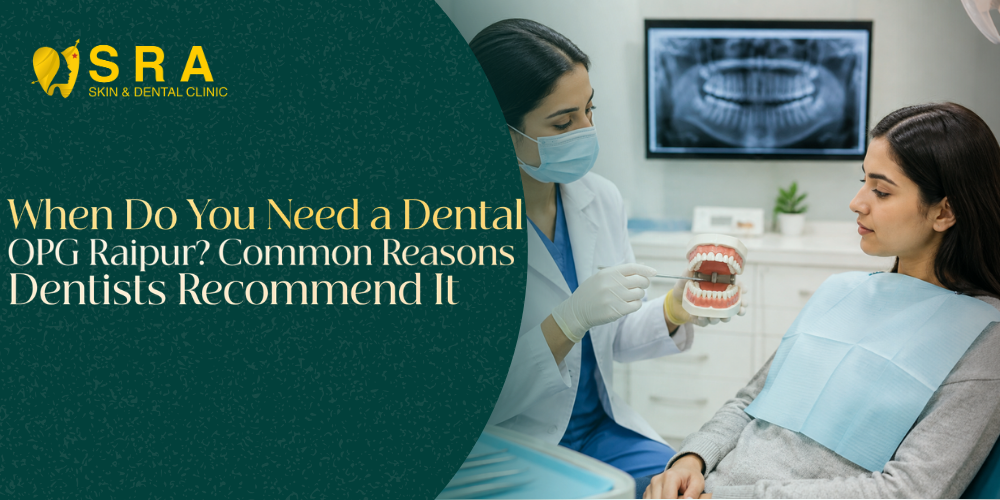
You visit a dentist because of pain near the back of your jaw. You expect the dentist to examine the tooth, prescribe medication, or perhaps suggest a simple dental X-ray. Instead, after examining your mouth, the dentist says:
“Let’s get an OPG first.”
For someone hearing the term for the first time, the immediate questions are usually predictable.
What exactly is an OPG? Why isn’t a regular dental X-ray enough? Is it painful? How long does it take? And, naturally, what does an OPG X-Ray Cost Raipur?
These are completely reasonable questions.
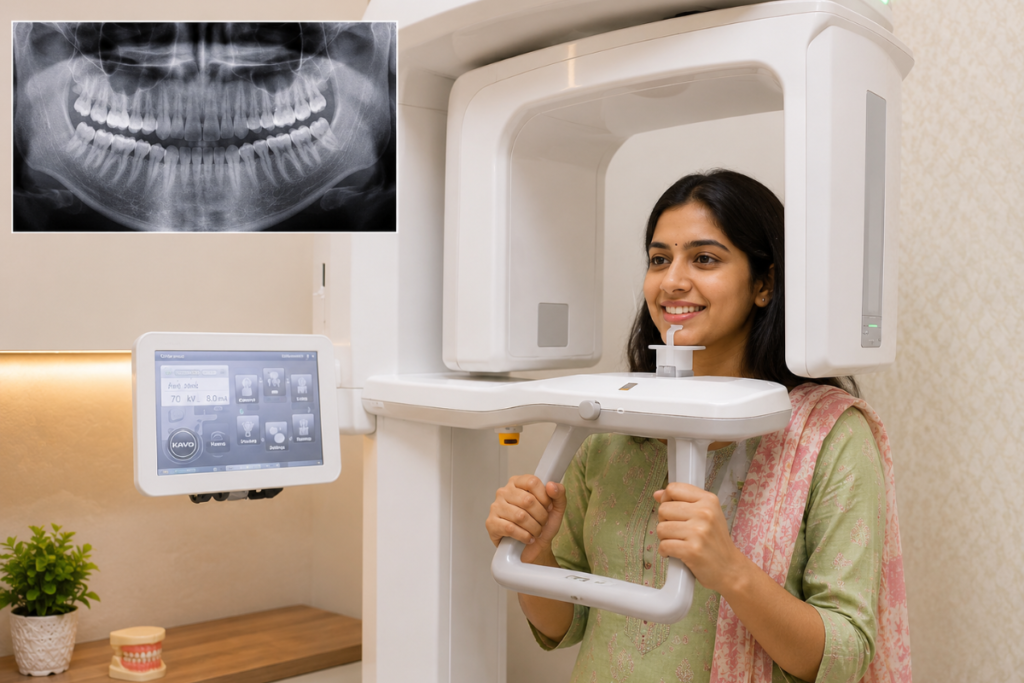
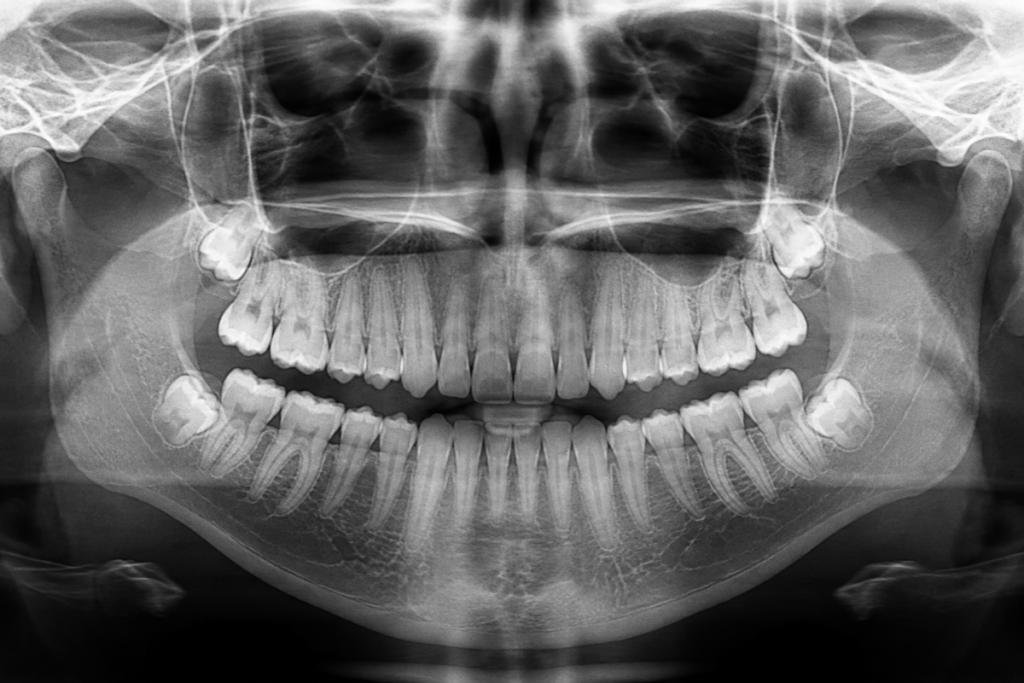
An OPG, or Orthopantomogram, is a panoramic dental X-ray that provides a broad view of your teeth, upper and lower jaws, and surrounding structures in a single image. Rather than showing only one or two teeth, it gives your dentist a much wider perspective.
That’s why OPG imaging is frequently recommended when the dentist needs to understand the bigger picture before making a treatment decision.
From impacted wisdom teeth and orthodontic planning to dental implants, jaw-related concerns, and multiple dental problems, there are several situations where an OPG can provide valuable diagnostic information.
If you’re searching for Dental OPG Raipur or trying to understand why your dentist has recommended one, this guide explains when an OPG is commonly needed, what happens during the procedure, how it differs from smaller dental X-rays, and what you should know before getting one.
What Is a Dental OPG?
OPG stands for Orthopantomogram.
It is a type of panoramic dental X-ray designed to capture a broad image of your mouth and jaw area.
Unlike a small intraoral X-ray, where a film or sensor is positioned inside the mouth to examine a limited number of teeth, an OPG is taken using a machine that moves around the outside of your head.
The resulting panoramic image can show:
- Upper teeth
- Lower teeth
- Upper jaw
- Lower jaw
- Tooth roots
- Developing or unerupted teeth
- Impacted teeth
- Jawbone
- Surrounding dental structures
Depending on the clinical situation, this wider view can help a dentist understand the position and relationship of several structures at once.
That doesn’t mean an OPG replaces every other type of dental X-ray.
Different imaging techniques answer different clinical questions.
Sometimes a detailed image of one tooth is exactly what the dentist needs. In another situation, looking at only one tooth would provide an incomplete picture.
That’s where panoramic imaging becomes useful.
Why Would a Dentist Recommend an OPG?
A good dentist doesn’t recommend imaging simply because the technology is available.
There should be a clinical reason.
Suppose you have pain around a lower wisdom tooth.
Looking inside your mouth might show that only a small portion of the tooth has erupted. What cannot always be determined from visual examination alone is how the tooth is positioned beneath the gum, how its roots are developing, or how it relates to neighbouring structures.
An OPG provides additional information.
Now consider someone planning braces.
The orthodontist doesn’t only care about the one tooth that looks crooked in your smile. They need to understand the overall arrangement of your teeth, jaws, unerupted teeth, and other structures relevant to treatment planning.
Again, the broader perspective becomes useful.
The key point is simple:
An OPG is usually recommended when the dentist needs information that cannot be obtained adequately through visual examination alone.
1. Wisdom Tooth Evaluation
One of the most common reasons dentists recommend panoramic dental imaging is to evaluate wisdom teeth.
Wisdom teeth usually appear toward the back of the mouth and can sometimes create problems when there isn’t enough space for them to erupt normally.
A wisdom tooth may be:
- Fully erupted
- Partially erupted
- Completely unerupted
- Angled toward another tooth
- Positioned horizontally
- Trapped within the jawbone
This is known as an impacted wisdom tooth.
Imagine a patient in their early twenties who develops recurring pain behind the last lower molar.
The gum occasionally becomes swollen. Medication provides temporary relief, but the discomfort keeps returning.
Simply looking inside the mouth might not reveal the complete position of the wisdom tooth.
An OPG can help the dentist evaluate its location, orientation, and relationship with nearby structures.
If you’re looking for Dental OPG Near Raipur because of recurring wisdom-tooth discomfort, your dentist may recommend panoramic imaging before deciding whether observation, treatment, or removal is appropriate.
2. Planning for Dental Implants
Dental implants require careful planning.
An implant is not simply placed wherever a tooth happens to be missing. The dentist needs to evaluate the area and determine whether it is suitable for treatment.
Imaging can help assess factors such as:
- Available bone
- Position of neighbouring teeth
- Nearby anatomical structures
- Overall jaw condition
- Location of the missing tooth
An OPG can provide a broad initial view of the jaws and surrounding structures.
However, it’s important to understand that implant planning may sometimes require more detailed three-dimensional imaging, such as CBCT, depending on the individual case.
An OPG and CBCT are not interchangeable.
Your dentist decides which type of imaging is appropriate based on the information required.
The goal isn’t to order the most advanced scan automatically. It’s to obtain the right diagnostic information for safe and predictable treatment planning.
3. Before Orthodontic Treatment or Braces
Orthodontics is about much more than making teeth appear straight.
A dentist or orthodontist needs to understand how your teeth are positioned within the jaws and how the entire dental arrangement relates to the planned treatment.
An OPG may be recommended during orthodontic assessment because it can provide information about:
- Tooth positions
- Developing permanent teeth
- Missing teeth
- Unerupted teeth
- Impacted teeth
- Tooth roots
- Jaw structures
Consider a teenager whose front teeth look crowded.
At first glance, the problem seems straightforward: there isn’t enough space.
But the dentist may need to know whether all permanent teeth have developed normally and whether any teeth remain trapped below the gum.
Panoramic imaging can reveal information that isn’t visible simply by examining the smile.
This allows orthodontic planning to be based on the entire dental picture rather than appearance alone.
4. Finding Impacted or Unerupted Teeth
Wisdom teeth aren’t the only teeth that can become impacted.
Sometimes another permanent tooth doesn’t erupt normally.
For example, a canine tooth may remain trapped inside the jaw instead of appearing in its expected position.
A patient may notice a gap and assume the permanent tooth simply never developed.
An OPG may show that the tooth is actually present but hasn’t erupted.
That information can significantly change treatment planning.
Depending on the tooth’s location, position, and surrounding structures, the dentist or orthodontist can determine what additional assessment or treatment may be required.
5. Evaluating Multiple Dental Problems at Once
Imagine someone who hasn’t visited a dentist for several years.
They now have:
Pain on one side.
A missing molar.
An old dental restoration.
Difficulty chewing.
And a wisdom tooth that’s occasionally uncomfortable.
In a situation involving several areas of concern, evaluating one tooth at a time may not initially provide the broad overview the dentist needs.
An OPG can give a panoramic view of both jaws and multiple teeth in one image.
This can help the dentist understand the overall situation before deciding which areas need more focused evaluation.
More detailed dental X-rays may still be required afterward.
Think of the OPG as the wide-angle view.
Once something deserves closer inspection, the dentist can zoom into that clinical question using other examinations or imaging techniques.
6. Jaw Pain and Certain Jaw-Related Concerns
Not every dental complaint begins with a tooth.
Some people visit because they feel discomfort around the jaw.
Others may report:
- Pain while chewing
- Swelling around the jaw
- Difficulty opening the mouth
- Unexplained discomfort
- Previous injury
- Changes in bite
Depending on the symptoms and clinical examination, the dentist may recommend panoramic imaging to obtain an overview of the jaw area.
It’s important to emphasize that jaw pain has many possible causes.
An OPG alone doesn’t automatically provide every answer.
Sometimes additional imaging, medical evaluation, or specialist assessment may be necessary.
The correct investigation depends on what the dentist suspects after examining you.

7. Checking Developing Teeth in Children and Teenagers
Children’s mouths are constantly changing.
Baby teeth fall out.
Permanent teeth develop beneath them.
New teeth erupt.
Jaw growth continues.
Sometimes everything follows the expected pattern.
Sometimes it doesn’t.
A dentist or orthodontist may recommend panoramic imaging when there is a specific reason to evaluate developing permanent teeth or investigate delayed eruption.
For example, if one permanent tooth hasn’t appeared long after the corresponding tooth on the other side, the dentist may want to determine whether the tooth is present and where it is positioned.
An OPG can provide a broad view of developing dentition.
Imaging in children should always be based on clinical need rather than performed unnecessarily.
Dental OPG vs Regular Dental X-Ray: What’s the Difference?
This is one of the most common questions patients ask.
The easiest way to understand it is through photography.
Imagine taking a close-up photograph of one flower.
You can see incredible detail in that flower, but you can’t see the entire garden.
Now take a wide-angle photograph.
You can see the whole garden, but you won’t necessarily get the same fine detail of that individual flower.
Dental imaging works somewhat similarly.
A Small Dental X-Ray
An intraoral dental X-ray usually focuses on a smaller area.
It may be useful for examining individual teeth, roots, bone levels, cavities, or other localized concerns depending on the type of image.
An OPG
An OPG captures a much broader panoramic view.
It is useful when the dentist needs to evaluate several teeth, both jaws, impacted teeth, or the overall dental arrangement.
Neither is universally “better.”
They serve different purposes.
A dentist may even use both during the same treatment journey because each provides different information.
Is Getting a Dental OPG Painful?
No.
The OPG procedure itself is non-invasive and generally painless.
Nothing needs to be injected.
You don’t need anaesthesia.
The imaging process typically takes only a short time.
You usually stand or sit at the OPG machine while your head is positioned correctly.
The technician may ask you to bite gently on a positioning guide and remain still.
The machine then rotates around your head while capturing the panoramic image.
The actual scan is usually completed quickly.
One advantage for people who struggle with intraoral X-rays is that an OPG doesn’t require a conventional dental film or sensor to be positioned deep inside the mouth.
Do You Need an OPG Every Time You Visit the Dentist?
No.
This is an important misconception.
An OPG shouldn’t become an automatic part of every dental visit simply because it is convenient.
Imaging should have a clinical purpose.
If you have a straightforward issue involving one tooth, another type of dental X-ray may be more appropriate.
If your dentist already has a recent diagnostically useful OPG and nothing relevant has changed, another panoramic image may not necessarily be needed.
The decision depends on your symptoms, medical and dental history, existing images, treatment plan, and clinical findings.
A responsible approach to dental imaging is always need-based.
Frequently Asked Questions
1. What is Dental OPG Raipur?
Dental OPG Raipur generally refers to panoramic dental X-ray services available in Raipur. An OPG captures a broad image of the teeth, upper and lower jaws, and surrounding structures.
2. When does a dentist recommend an OPG?
An OPG may be recommended for wisdom-tooth assessment, orthodontic planning, impacted teeth, implant assessment, multiple dental concerns, certain jaw problems, dental trauma, or surgical planning.
3. Is an OPG painful?
No. An OPG is a non-invasive imaging procedure and is generally painless. The machine rotates around your head while you remain still for a short period.
4. How long does an OPG take?
The actual imaging process is usually quick, although the complete appointment may take slightly longer because of registration, positioning, and image processing.
5. What is the OPG X-Ray Cost Raipur?
The OPG X-Ray Cost Raipur can vary between clinics and diagnostic centres depending on the facility, equipment, reporting, and services included. Contact the provider directly for its current pricing.
Conclusion: An OPG Helps Your Dentist See the Bigger Picture
Dental problems aren’t always limited to what can be seen when you open your mouth.
A wisdom tooth can be trapped beneath the gum.
A permanent tooth can remain unerupted.
Orthodontic treatment may require evaluation of teeth that aren’t visible yet.
Implant planning may require a better understanding of the jaw.
And sometimes several dental concerns need to be assessed together.
That’s where an OPG becomes valuable.
It gives your dentist a panoramic view of your teeth and jaws, helping them gather information that may not be available through visual examination alone.
If your dentist recommends an OPG, don’t hesitate to ask why it’s needed. Understanding the purpose of the investigation helps you participate more confidently in decisions about your dental care.
For patients looking for Dental OPG Raipur or Dental OPG Near Raipur, SRA Dental Clinic can be considered for professional dental consultation and guidance regarding appropriate diagnostic imaging based on individual treatment requirements.
And if you’re comparing the OPG X-Ray Cost Raipur, remember that cost is only one part of the decision. Appropriate imaging, image quality, professional interpretation, and a clear treatment plan matter just as much.
If you’re experiencing wisdom-tooth pain, planning braces or implants, dealing with an unerupted tooth, or have been specifically advised to get an OPG, book a dental consultation rather than delaying the investigation. The right diagnosis gives your dentist the foundation to recommend the right treatment—and that is where good dental care should always begin.